The Rent Collector Who Became an Icon
Laurence Stephen Lowry was never a full-time artist. For nearly 40 years, he worked as a rent collector and clerk for the Pall Mall Property Company in Manchester. He painted in the evenings, often late into the night, in the bedroom of the house he shared with his mother on Station Road, Pendlebury.
He had no grand studio. No wealthy patron. No connections in the London art world. What he had was an obsession with the streets around him: the mills, the chimneys, the terraced houses, and the people who moved through them like scattered matchsticks against the grey.
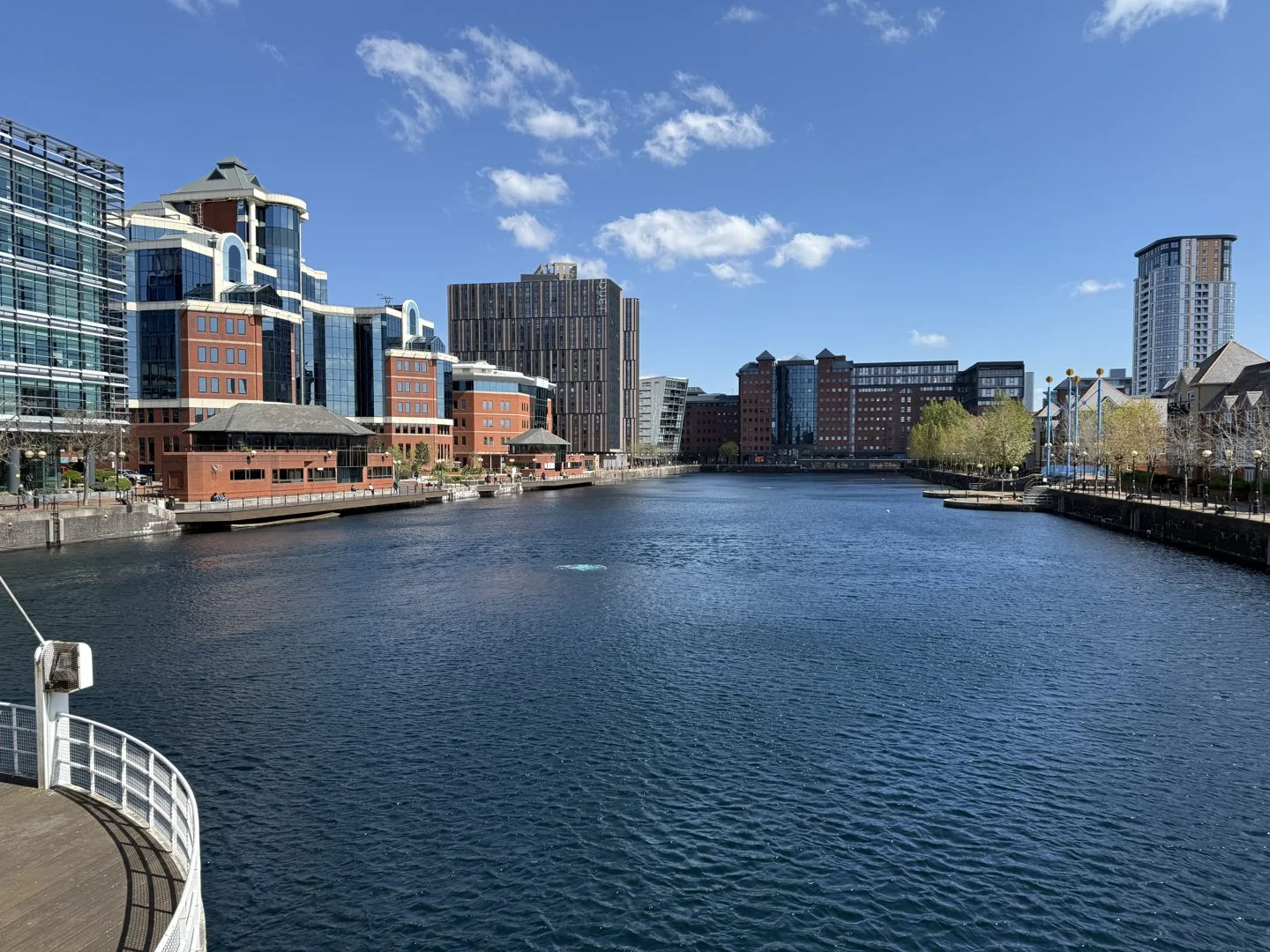
Salford Quays, 2026. The industrial docks and mills that Lowry painted are gone. In their place: the BBC, ITV, and The Lowry theatre named in his honour.
Painting What Nobody Else Would
In the early 20th century, industrial landscapes were not considered suitable subjects for serious art. The art establishment looked to pastoral scenes, portraits of the wealthy, and classical subjects. The smoking factories of Salford were seen as ugly, unworthy of the canvas.
Lowry disagreed. He saw beauty in the mundane, drama in the ordinary, and poetry in the daily trudge of working people going about their lives. He developed a distinctive style: pale, almost white skies; muted, washed-out backgrounds; and those instantly recognisable stick-like figures that gave his work its unique character.
His palette was famously limited: flake white, ivory black, vermilion, Prussian blue, and yellow ochre. Just five colours. He mixed them to create the silvery, overcast atmosphere that defined his world.
The Salford That Made Him
Lowry moved to Pendlebury in 1909 when he was 22. The area was the heart of industrial Lancashire: cotton mills, iron works, and terraced streets packed with workers. It was here, walking home from the train station one evening, that he first saw the scene that would define his life's work.
He later recalled the moment: the mill workers streaming out of the factory gates, the chimneys silhouetted against the pale sky, the entire scene alive with movement and purpose. From that evening on, he was hooked.
The Manchester Ship Canal, which ran through Salford, brought goods from all over the world into the industrial heartland. The docks that served it are now Salford Quays, home to MediaCityUK. The Lowry theatre and gallery sits right on the waterfront, a fitting tribute to the man who made these streets famous.
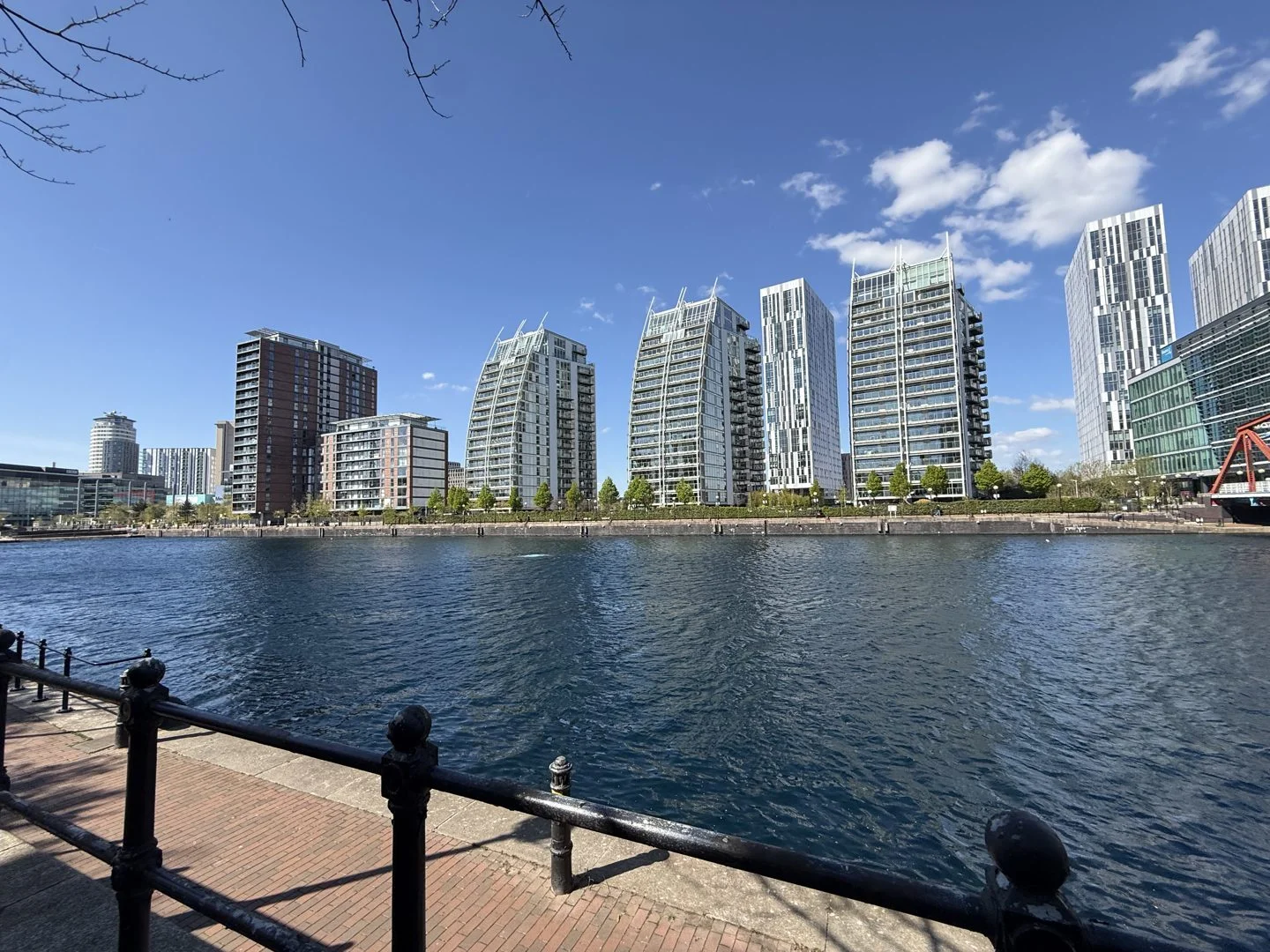
The skyline of Salford Quays, where the Manchester Ship Canal docks once stood. Lowry would not recognise the view, but the water is the same water.
Recognition, Reluctantly
Success came slowly. Lowry's first London exhibition was in January 1939, at the Lefevre Gallery, when he was 51. He had been painting seriously for over 20 years. The art world's reaction was mixed: some critics dismissed his work as naive or simplistic, while others recognised something genuinely original.
By the 1960s and 70s, Lowry was one of the most popular artists in Britain. His paintings of northern industrial life resonated with millions who recognised their own streets, their own lives, in his work. He became that rarest of things: an artist who was both critically respected and genuinely loved by ordinary people.
Yet he remained stubbornly modest. He turned down every honour offered to him, including a knighthood in 1968. He later remarked that "there seemed little point once mother was dead." After his mother's death in 1939, his house was repossessed in 1948 and he moved to The Elms in Mottram in Longdendale, on the edge of the Pennines, where he lived quietly for his last 28 years. He died at Woods Hospital, Glossop, in 1976 at the age of 88.
"Had I not been lonely, none of my work would have happened. I should not have seen the way I saw things."
Legacy
Today, Lowry's work hangs in galleries around the world. The Lowry arts centre in Salford Quays, designed by Michael Wilford and opened in 2000, holds the largest public collection of his work: over 400 paintings and drawings.
But his real legacy is simpler than any gallery or price tag. He showed the world that ordinary life was worth painting. That the streets of Salford were as valid a subject as any Tuscan hillside. That the people walking to the mill in the morning rain deserved to be seen.
Manchester has always been a city that refuses to be ignored. Lowry was the first person to put that spirit on canvas.